The rhythm
Plan the food journey around contrast rather than volume. One lunch or dinner at Dida can carry the premium end of the trip; another meal can be deliberately simple and local. Visit a market if timing works, walk before eating, and keep the day light enough that the meal feels like an event. The aim is not to consume every regional speciality in forty-eight hours but to understand why the coast tastes the way it does.
What to eat and why it matters
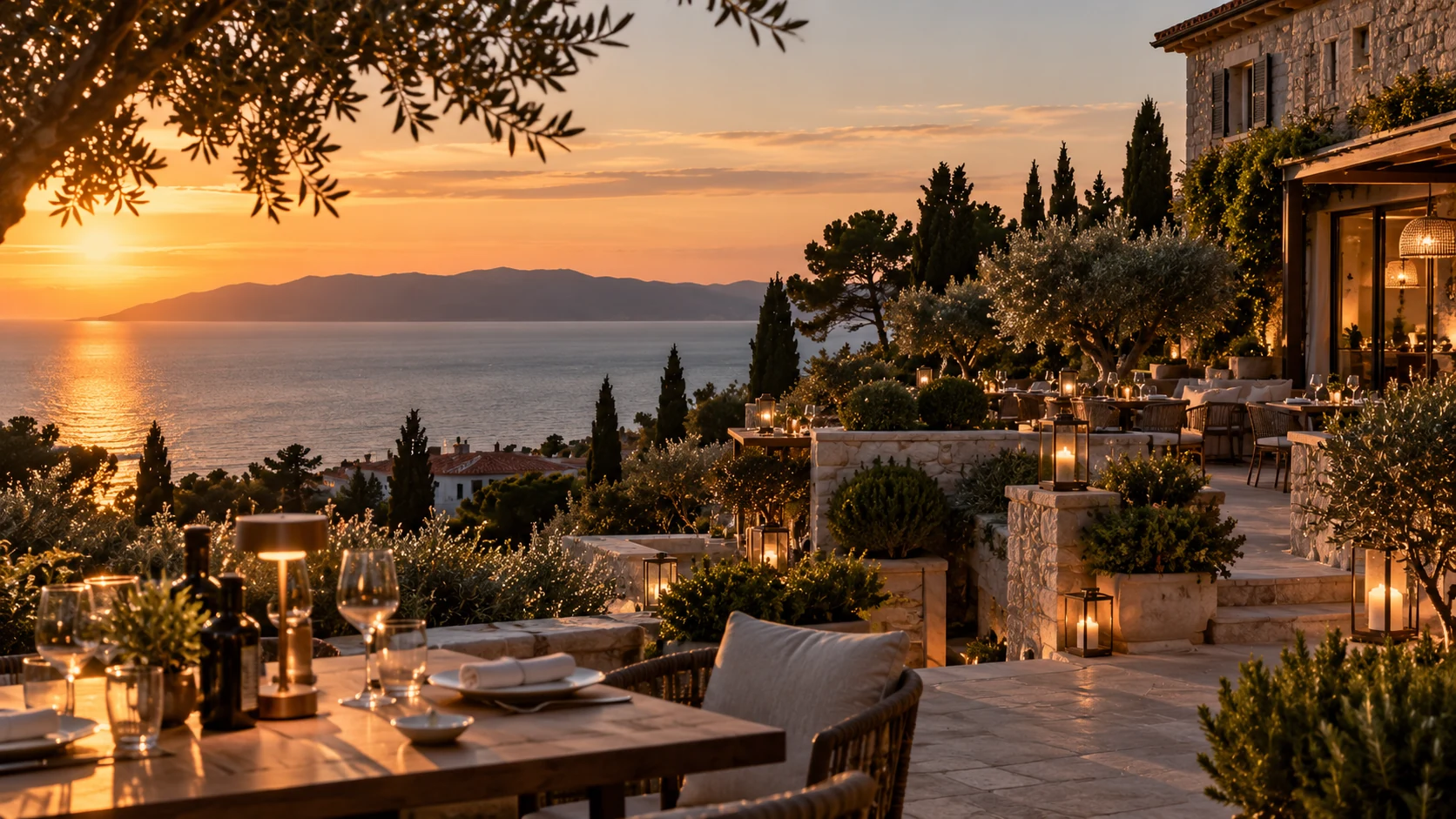
Dida’s official menu and site emphasise seasonal local ingredients, fresh fish, homemade pasta and Kvarner scampi, with a contemporary interpretation of Mediterranean flavours. The Crikvenica Riviera’s own tourism material also highlights fish, local wine and regional dishes. Together they create a convincing story: the table can move from polished tasting-menu technique to simpler coastal cooking without leaving the destination’s identity.
Practical planning
For important meals, reserve directly and check current menus and opening hours before travelling. If wine is part of dinner, stay close enough to avoid driving afterward. Lunch can be especially effective in quiet season because the light and sea view remain part of the experience. Build the rest of the day around appetite: a long walk, a market, or an easy excursion rather than another scheduled tasting.
Who this trip is for
This page is for travellers who choose destinations through food. It also suits people already considering Crikvenica who need a stronger reason to stay overnight rather than pass through. The most persuasive version of the trip is two nights: enough time for Dida, a second local meal, morning coffee and a walk that makes the coast feel lived-in rather than consumed.